
What the Data Tells Us
With synthetic fertiliser costs remaining high and increasing industry pressure to improve nitrogen-use efficiency and sustainability, MCA Ag Research – as part of the Cotton Research and Development Corporation (CRDC) Innovation Call - launched a feasibility study into the viability of pulse green manure crops within irrigated cotton systems.
This project evaluates whether the natural nitrogen-fixing benefits of pulse crops can outweigh the added costs of seed, management, and irrigation, helping growers make informed decisions for their rotations.
The first part of this study comprises a desktop assessment and a survey of cotton growers and consultants to understand their experiences, perceptions and willingness to adopt green manuring. The findings of this survey will help design a potential on-farm validation project.
Project Overview: Balancing Free Nitrogen with Crop Costs
A "green manure" is a sacrificial, fast-growing crop incorporated into the soil while still green to return organic matter and nutrients to the system. While historical industry studies have shown legumes fixing between 100 and 260 kg N/ha (representing significant fertiliser-replacement potential), growing a cover crop requires land, water, and management inputs.
Our study combines direct feedback from local growers and consultants with an agronomic desktop review to establish where green manure crops genuinely add value on farm.
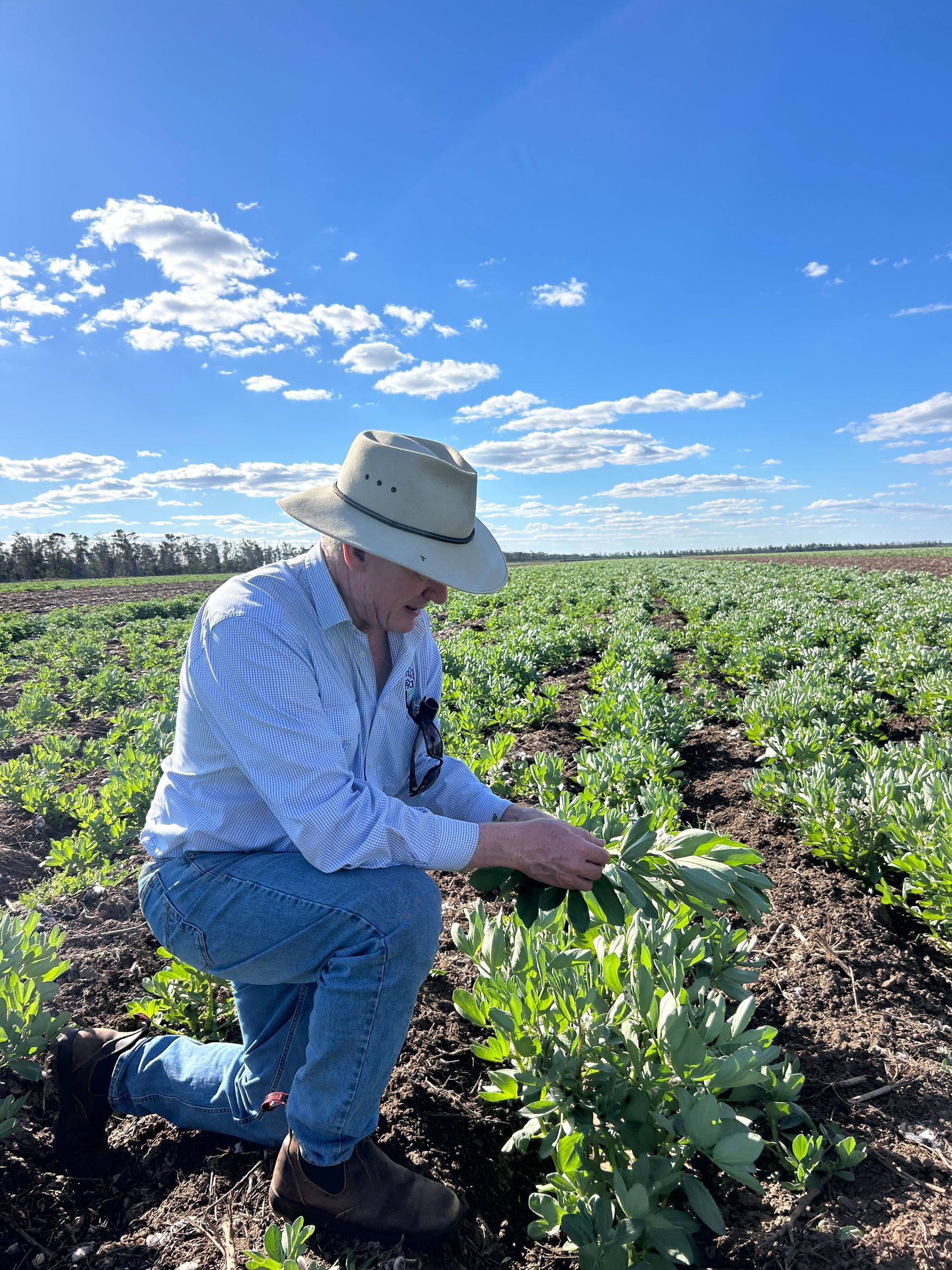
Inspecting Faba Bean growth and biomass production in a large-scale, replicated field trial near Goondiwindi, QLD.
Industry Survey Insights: What Growers & Consultants Said
Our recent survey captured perspectives from 36 key industry respondents (58% irrigated cotton growers, 33% agronomic consultants):
- Current Adoption: 75% of respondents have used cover or green manure crops, with 22% using them regularly and 53% using them occasionally. Over 90% expressed interest in adopting them or are actively using them.
- Perceived Benefits: Improved soil structure and condition was cited as the top benefit (86%), followed by improved water infiltration (64%) and reduced synthetic nitrogen requirements (44%).
- Primary Adoption Barriers: The biggest hurdles preventing regular use are lack of irrigation water (70%), seedbed preparation timeliness (56%), and fitting crops into tight rotational windows (42%).
- Disease Risks Are Critical: Soil-borne disease is a major consideration. Verticillium wilt was flagged as a relevant concern by 75% of respondents and Fusarium by 61%. Notably, 83% stated that even a slight increase in disease risk would be a major concern or deal-breaker.
- Species Preferences: Faba beans were the standout choice for winter green manure crops (67%), while Millet/Sorghum (56%), Cowpea (33%), and Sunn hemp (25%) led summer preferences.
Desktop Study Findings: Key Agronomic Insights
Complementing grower feedback, our technical analysis highlighted several key agronomic factors:
- Starting Soil Nitrogen is Decisive: Legumes preferentially scavenge existing soil nitrogen rather than fixing atmospheric nitrogen via rhizobia symbiosis. In fields with starting soil N >50kg N/ha, N-fixation drops significantly. A survey of MCA client paddocks post-cotton harvest revealed that 26% of fields had <50kg N/ha (ideal for legume N-fixation), while 30% had high residual N where a grass cover crop would be better suited to scavenge deep nitrates.
- Rotational Fit & Irrigation: Faba beans perform well in winter windows (March to August), whereas Sunn hemp offers rapid biomass production and N-fixation (up to 60-146kg N/ha in 60-90 days) during warm summer windows. Overhead irrigation systems provide greater flexibility for light establishment water compared to flood irrigation systems.
- Disease Dynamics: While legumes can host certain diseases, recent commercial observations and preliminary DNA testing indicate that green manure crops like faba beans and multi-species mixes may actually help suppress Verticillium wilt and Black Root Rot DNA levels. Further field validation remains a high priority.
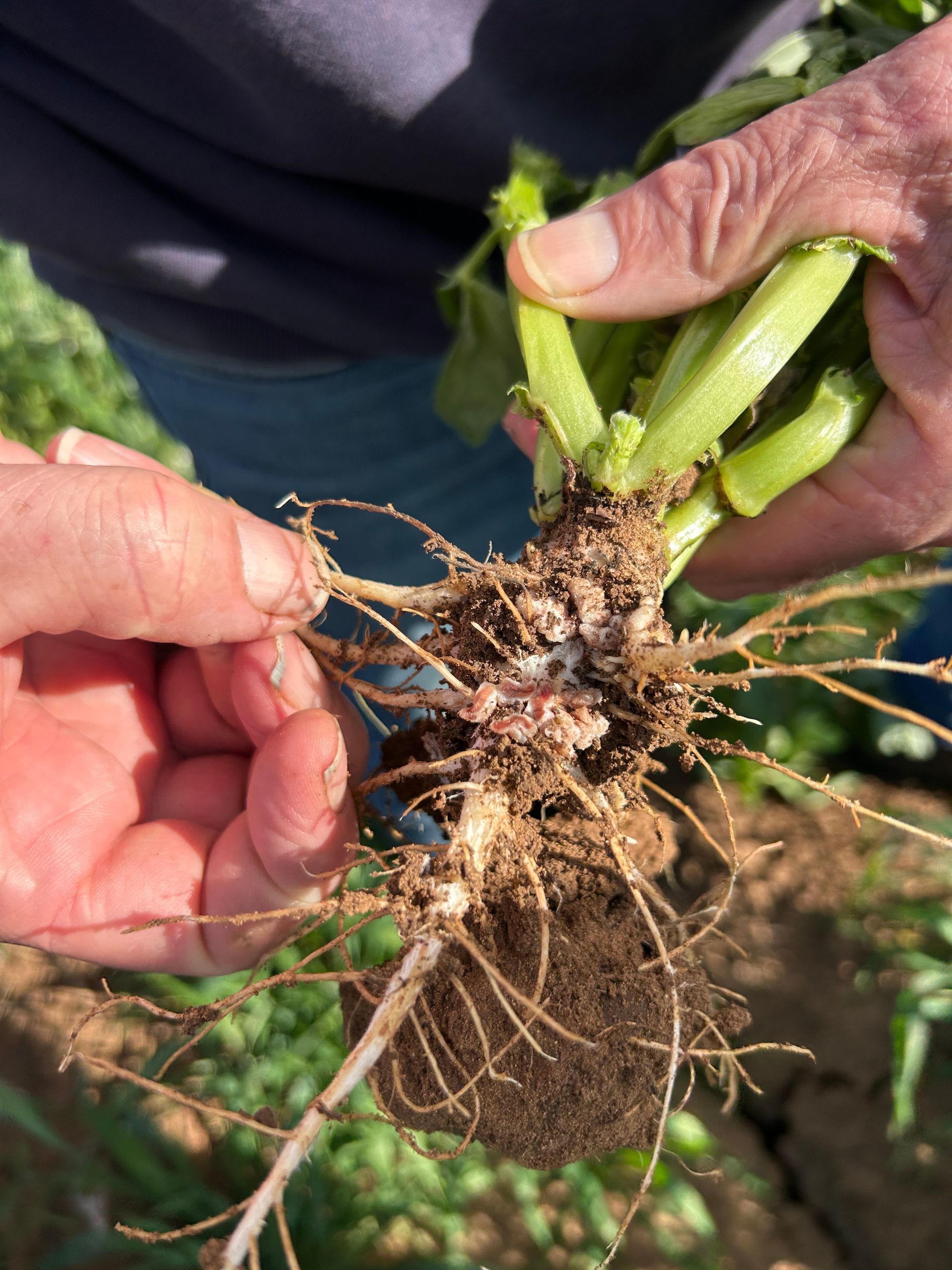
Active root nodulation on faba beans - the pink internal color confirms atmospheric nitrogen is actively being fixed by rhizobia.
What's Next
Survey results highlighted that comprehensive economic gross margin analyses (72%) and local trial data (61%) are essential to building grower confidence.
In addition to our CRDC feasibility study, MCA has coordinated a separate, commercial-scale replicated field trial with local MCA client Clark Farming Group (Goondiwindi, QLD). This project compares a faba bean green manure crop against a bare winter fallow. In collaboration with the QLD DPI Low Emissions Intensity Farming Systems (LEIFS) project and Crown Analytical Services, the trial is tracking:
- Nitrogen accumulation and soil carbon levels
- Soil disease DNA presence
- Operational costs relative to bare fallow strips (for economic analysis)
- Subsequent cotton yields
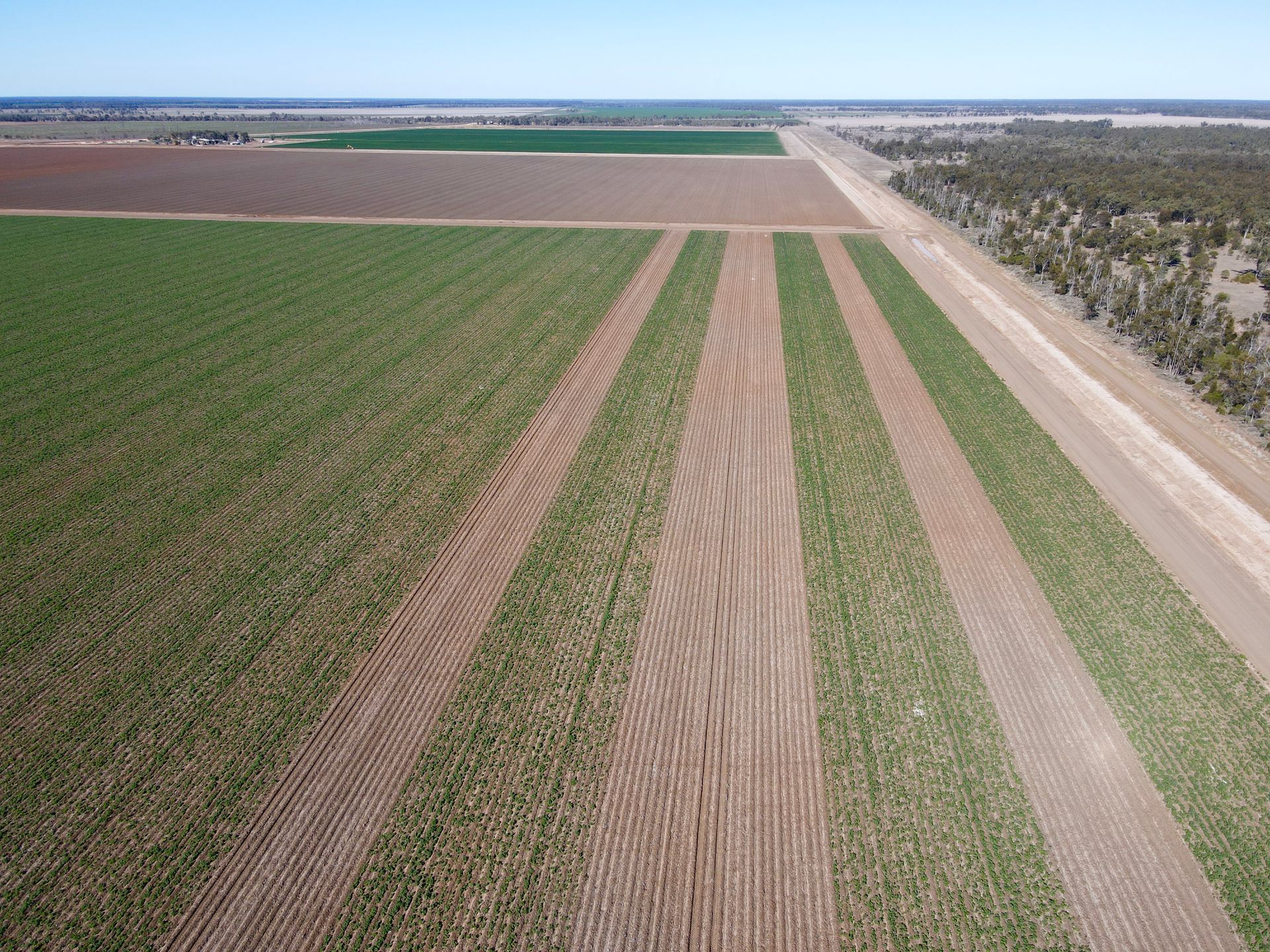
Aerial view of the commercial-scale replicated trial at Clark Farming Group (Goondiwindi, QLD), comparing faba bean manure strips against bare fallow.
A massive thank you to everyone who completed the survey and supported this initial research phase! As we finalise our feasibility reporting for CRDC, we are actively planning the next steps to bring more local data to the industry as we await outcomes for the next stage of project funding. Stay tuned for updates on trial results and future project milestones!
This project is proudly supported and funded via the Cotton Research and Development Corporation (CRDC) Innovation Call.